Car · Toyota
Toyota 2000GT: The grand tourer that announced Japan
The grand tourer that announced Japan. The Toyota 2000GT is a limited-production front mid-engine, rear-wheel-drive, two-door, two-seat sports car/grand tourer designed by Toyota in collaboration with Yamaha. First displayed to the public at the Tokyo Motor Show in 1965, the 2000GT was manufactured under contract by Yamaha between 1967 and 1970.
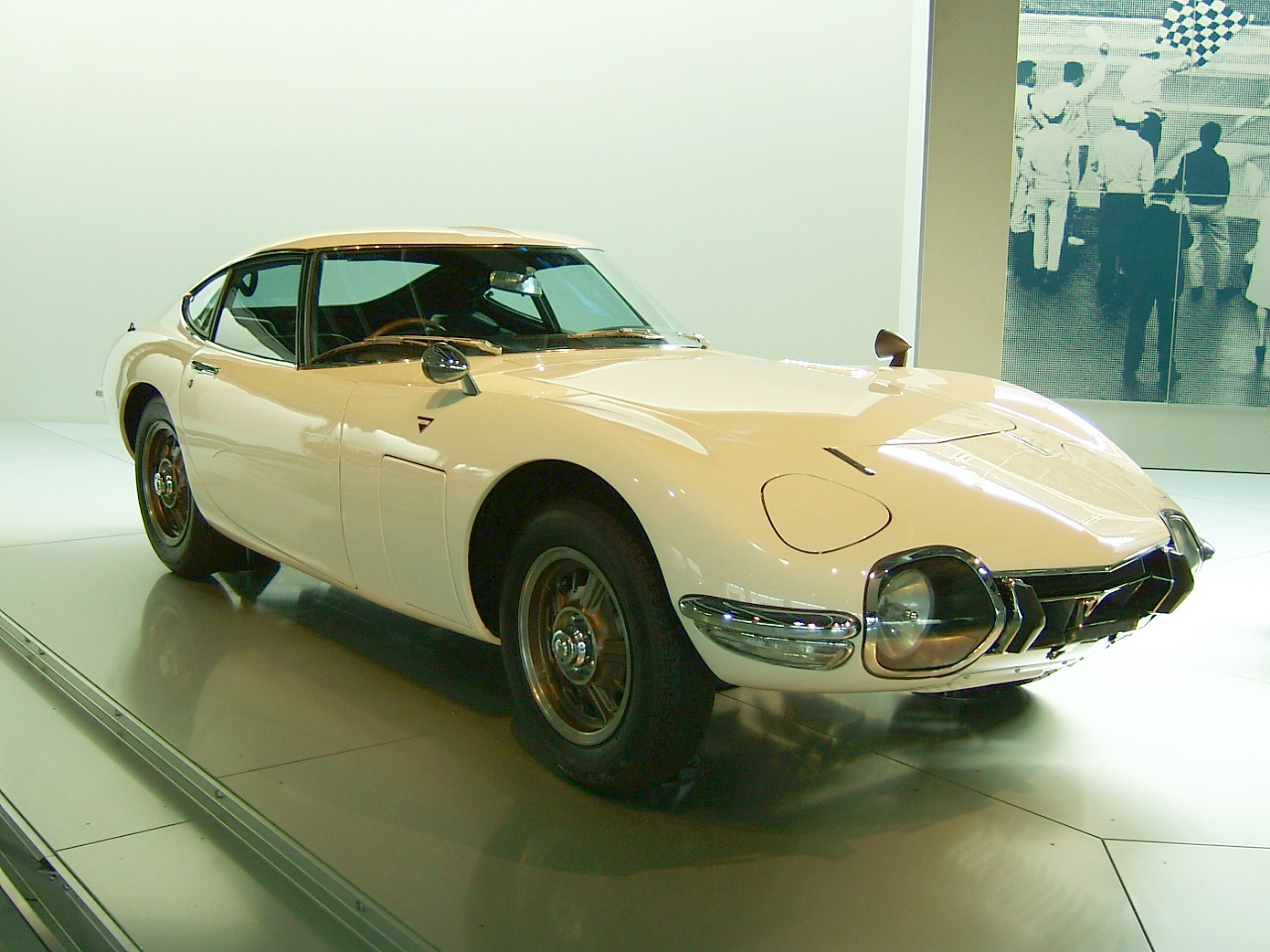
TOYOTA 2000GT.jpg · Wikimedia Commons contributor · CC BY-SA 3.0
Unmodified image file; scaled to fit the page. Photo remains under its stated license.
At a glance
| Maker | Toyota |
|---|---|
| Type | Car |
| Engine | Toyota M engine |
| Length | 4,175 mm |
| Width | 1,600 mm |
| Height | 1,170 mm |
| Wheelbase | 2,330 mm |
| Total produced | 351 |
Background
Automobile ownership in Japan during the late 1950s and early 1960s began to pick up, and Toyota noticed that most international manufacturers had a top level sports car or grand touring coupe, that would draw customers into showrooms and dealerships and drive sales of other more affordable models. Ford had recently introduced the Thunderbird, Chrysler had the C-300 while GM's Chevrolet Division had the Corvette. In Europe, Mercedes-Benz had the 300SL, BMW briefly offered the 507, Porsche had the 356, Jaguar had the E-Type, Aston Martin had the DB4, Ferrari had the 250 GT Coupé, and Maserati had the 3500 GT. In Japan, Nissan offered the Datsun Sports, while Honda introduced the S500 and Prince offered the Skyline Sport Coupé. Toyota had already began production of the Sports 800, but the engine was far too small to be considered a world class sports car, and decided they needed to offer a proper 6-cylinder coupe.
Most of the 2000GT's design was done by Yamaha Motor Corporation, who also contributed contract assistance for other Japanese manufacturers, including Nissan. In 1959, Yamaha established the Technical Research Institute to develop their own sports car, and had built the YX30 sports car with a 4-cylinder engine displacing 1600cc, having drawn inspiration from the British MGA B-Series 1600 DOHC engine. Due to various problems, Yamaha senior management decided to close the research facility in 1962, but enthusiasm of developing a sports car led to them partnering with an established auto manufacturer. A prototype called the "A550X" was built, but Nissan cancelled the project and introduced the slow selling Nissan Silvia coupe in 1965. Yamaha then proposed the design to Toyota, for whom they also did contract work, then perceived as the most conservative of the Japanese car manufacturers. Wishing to improve their image, Toyota accepted the proposal, but employed a design from their own designer Satoru Nozaki.
Production
Only 337 regular production units of the 2000GT were built, figures comparable to contemporary elite Italian supercars, and according to Toyota, all 337 were sold. The first prototype was built in August 1965, only 11 months after the project had begun. Taking two years for production vehicles to finally emerge, a total of 233 MF10s, 109 MF10Ls, and nine MF12Ls were built at the Yamaha factory in Iwata, Shizuoka according to Toyota and Yamaha data, starting in May 1967 until August 1970. In America, a 1968 2000GT listed for about US$7,150 ($66,197 in 2025 dollars ), a moderately higher price than competitors like the $5,539 Jaguar E-Type or the $6,790 Porsche 911S, though much lower than exotics like the $19,700 Ferrari 365 GTB/4. Toyota did not sell very many of the cars, which led to its cancellation in 1970, while it did inspire the company to introduce performance oriented "sporty" coupes that followed in the 1970s.
As a "halo car" for Toyota, it is believed that no profit was made on the 2000GT despite its high price. About 60 units reached North America and the others were similarly thinly spread worldwide. Most 2000GTs were painted either Solar Red or Pegasus White, while other colors were offered such as Thunder Silver metallic, Bellatrix Yellow, Atlantis Green, and Twilight Turquoise metallic.
Yamaha and Toyota also collaborated on another more affordable production car, again using a Toyota engine block while Yamaha developed the DOHC cylinder head, and introduced the Toyota 1600GT, using a 1967 Corona 2-door hardtop coupe. When production of the 2000GT ended, and Toyota had established a reputation of making performance oriented cars, the Celica was exclusively introduced at Toyota Corolla Store locations as the top model, again offering a 2.0L DOHC engine with a manual transmission but more affordably priced. Toyota also introduced sport coupes at each of their sales distribution networks, using the same technology in a 2-door coupe with an OHC 4-cylinder engine and a fun-to-drive approach to each car. May 1967 was also the same time the Mazda Cosmo was also introduced.
Lessons learned by Toyota and Yamaha led to the development of the Toyota 7, which was designed primarily for use in FIA Group 7 competition. It was Toyota's first purpose-built racing car.
Recognizing that the limited number of original cars may need maintenance to keep the vehicles in drivable condition, Toyota has begun reproducing new parts from original sources, and has made them available to registered owners through the GR Heritage Parts Program.
Model history and photograph may show different years or specifications. These are model-reference photographs, not vehicles offered for sale. No photographer or manufacturer endorsement is implied.
Sources and image credit
Structured record: Wikidata Q1324772 · checked 2026-11-03. The At a glance table is drawn from that record; fields the record does not contain are omitted.
Text adapted from the English Wikipedia article “Toyota 2000GT” (en.wikipedia.org), CC BY-SA 4.0 · checked 2026-11-03.